NEWS
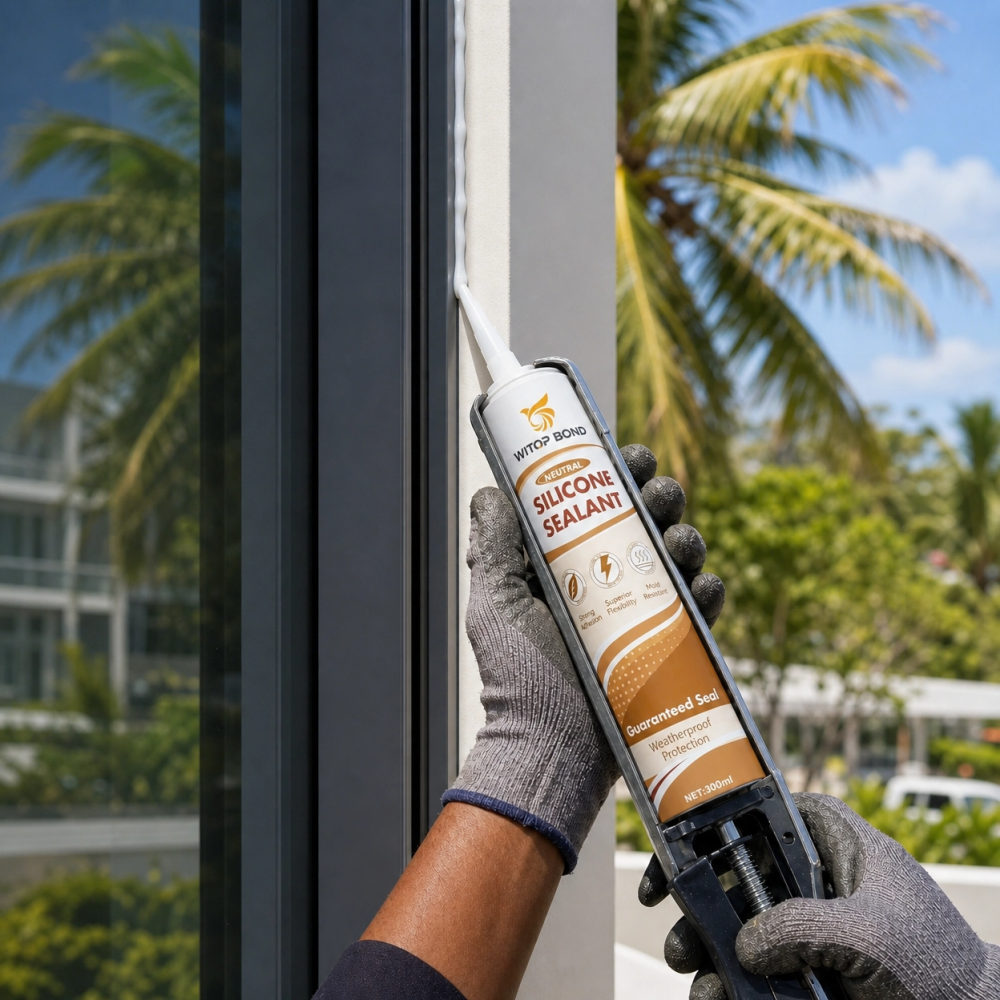
Neutral Silicone Sealant: Non-Corrosive Weather Protection for Curtain Walls and Stone
Neutral silicone sealant is commonly considered for flexible exterior joints where non-corrosive curing and weather resistance matter. But can every neutral silicone be used on a curtain wall, and is every formulation stone safe? This buyer guide explains the differences and the checks to make before choosing a grade.
Q1: What makes neutral silicone different from acetic silicone?
Neutral silicone uses a non-acidic curing system, unlike acetoxy silicone, which releases acetic acid as it cures. Neutral-curing products are often considered where compatibility with metals, coatings and other sensitive surfaces is important.
The term non-corrosive should be supported by the technical information for the exact grade. It does not mean that one cartridge is suitable for every metal, finish or adjacent material.
Q2: What should buyers look for in a weather-resistant sealant?
For exposed joints, review resistance to UV and weathering, the specified service conditions and the ability to accommodate movement. An exterior joint also depends on sound adhesion and the correct bead design; a weather-resistant formulation cannot compensate for an unsuitable installation.
Ask for a Technical Data Sheet (TDS) covering the intended substrates, application conditions and movement capability. Compare documented performance rather than relying on a front-label claim alone.
Q3: Can neutral silicone be used on curtain walls?
Appropriate grades can be used for curtain-wall weather sealing. However, weather sealing and structural glazing are different jobs. Closing a joint against weather is not the same as supporting glass or transferring structural loads.
Never assume that a general-purpose neutral silicone is a structural glazing adhesive. Structural work requires a specifically approved product, project-specific design and manufacturer review. Dow’s structural sealant glazing manual makes this distinction between weathersealing and structural products.
Q4: Does neutral cure automatically mean stone safe?
No. Natural stone can develop staining at joint edges when paired with an unsuitable sealant. Select a documented non-staining stone grade and test the actual stone, including any surface treatment.
For context, Sika’s natural-stone sealant guidance calls for testing actual substrates and conditions. This illustrates why stone safe must be assessed for the specific application, not inferred from the words neutral silicone.
Q5: Can it be painted after curing?
Do not assume paint will adhere to cured silicone. Many conventional silicone grades are not overpaintable. Check the exact TDS; if the joint must be painted, discuss an appropriate alternative with the supplier and test the complete sealant-and-coating system.
Q6: What preparation and installation checks matter?
- Confirm the product is intended for the substrate and exposure.
- Remove dust, grease, loose coatings and incompatible old material.
- Follow the TDS for surface dryness, primer and compatible backing materials.
- Use the specified joint dimensions and finish within the working time.
- Follow product-specific curing and protection instructions before service.
Q7: What information should an overseas buyer provide?
Send the substrate types, joint dimensions, indoor or outdoor exposure, required color, packaging needs, estimated quantity and delivery destination. Identify whether the work is ordinary perimeter sealing, curtain-wall weather sealing or a structural application.
Request the current TDS and Safety Data Sheet (SDS), relevant test evidence and a sample evaluation plan. Confirm storage conditions, shelf life and shipping requirements for the actual formulation before ordering.
Q8: How can WITOP BOND support product selection?
WITOP BOND is an adhesive and sealant manufacturer and supplier serving international buyers with global shipping. Share your project requirements so we can discuss product selection, samples, packaging and shipment arrangements.
Suitability, performance claims and delivery arrangements must be confirmed for the selected product and destination. The independent references above explain general industry practices; they are not certifications or test results for WITOP BOND products.