NEWS
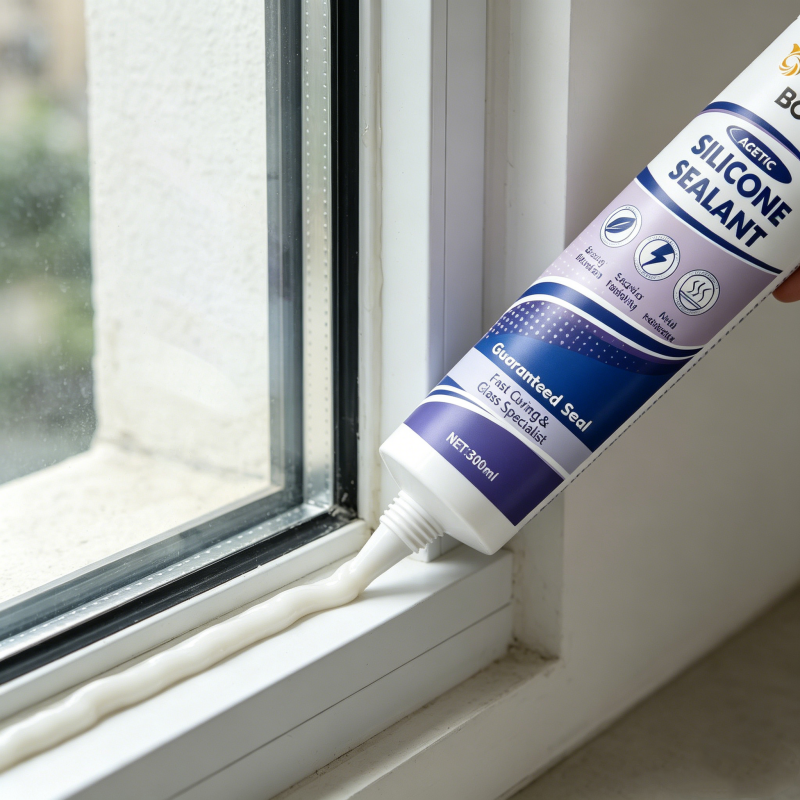
Acetic Silicone Sealant for Glass Sealing and Waterproof Joints
Acetic silicone sealant is a familiar choice for glass sealing and compatible non-porous joints. For distributors and installers, its value lies in choosing the right formulation for the material and exposure. A general glass sealant, a sanitary silicone and an aquarium silicone may look similar in a cartridge, but their intended uses are not interchangeable.
Understanding Vinegar Cure
Acetic silicone, also called acetoxy silicone, reacts with moisture in the air and releases acetic acid while curing. This creates the characteristic vinegar smell. The curing mechanism explains the term vinegar cure; it does not, by itself, establish bond strength, service life or application suitability.
Because the curing chemistry can be unsuitable for sensitive metals and alkaline materials, buyers should check compatibility rather than assuming that a glass sealant will work on every frame or adjacent surface. Sika’s overview of silicone curing systems discusses this distinction between acidic and neutral grades [1].
Glass Sealing and Waterproof Joints
An appropriate acetic silicone grade can form a flexible seal on specified glass and other compatible surfaces. Buyers commonly evaluate this product category for non-structural glass joints and connections involving glazed ceramic materials. Sanitary applications require a formulation documented for that use, not simply any silicone cartridge.
The word waterproof should describe a defined, correctly installed application. It is not evidence that a product is approved for continuous immersion, drinking-water contact, structural glazing or every wet-area detail. Confirm the exposure, required movement capability and curing conditions with the supplier before installation.
Aquarium Applications Need a Dedicated Grade
Aquarium construction is a separate selection decision. A product used around ordinary glass should not automatically be used to assemble or repair a tank. Select a silicone explicitly approved for the intended aquarium application and follow the manufacturer’s design, preparation, curing and testing requirements.
Soudal, for example, supplies a separate silicone specifically described for all-glass aquariums [2]. This illustrates the need for application-specific documentation; it does not establish aquarium suitability for a WITOP BOND product. Buyers should request written confirmation for the exact grade rather than relying on the terms clear silicone, vinegar cure or waterproof.
Planning an Installation
Start by identifying the glass, frame material, coatings and adjacent seals. Ask for the current Technical Data Sheet and Safety Data Sheet, and carry out an adhesion trial using the actual materials. Prepare the joint and apply the bead according to the selected product’s instructions.
Do not judge full curing only by a dry surface or reduced odor. Confirm when the completed joint may be exposed to water or put into service. For safety-critical assemblies, use the specified installation system and obtain the required technical review instead of substituting a general-purpose sealant.
Sourcing from WITOP BOND
WITOP BOND manufactures and supplies adhesives and sealants for international customers, with global shipping arrangements. To discuss an acetic silicone order, provide the intended application, substrate details, preferred color, packaging, quantity and delivery destination.
Ask us to confirm the recommended grade, available supporting documents, sample arrangements and delivery terms before purchasing. Special uses, including aquariums, require explicit product-specific confirmation.
Technical References
- Sika, Sealants for New Construction and Renovation of Residential Buildings
- Soudal, Silirub AQ Silicone Sealant for Aquariums and Terrariums
These references describe general technology or other manufacturers’ products. They are not certifications, test reports or performance guarantees for WITOP BOND products.