NEWS
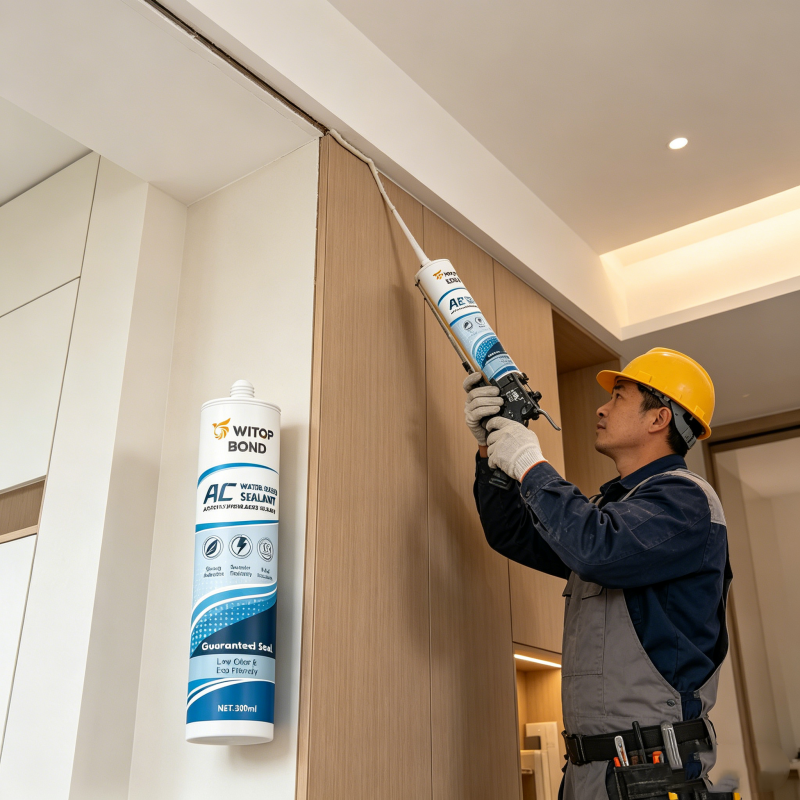
Why Paint Cracks Over Acrylic Sealant: A Pre-Paint Checklist
Acrylic sealant can help finish suitable interior trim joints, but a paintable label is not a guarantee against every finishing defect. When a thin crack appears after decoration, investigate the complete sealant-and-paint system before ordering a replacement product. A short, documented review can make the next trial more useful.
1. Identify what has actually cracked
Photograph the joint before repairs obscure the evidence. Record whether the visible line runs through the paint film, through the sealant, or along a joint edge. These observations are different, and a photograph alone may not settle the cause. Ask the installer to compare an affected area with an unaffected joint from the same work.
Water-based acrylic sealants lose water as they dry and can shrink. If paint is applied too early, the changing surface can strain the coating. Bostik identifies this mechanism, alongside paint formulation, joint deformation and tooling residue, in its factsheet on paint cracking. These are possible causes, not a diagnosis of a particular WITOP BOND installation. Bostik: Cracking in acrylic paints
2. Reconstruct the finishing sequence
Write down the sealant model, application date, approximate bead dimensions, primer and paint names, and the interval before each coating. Add the room and substrate conditions where known. Mark missing information as unknown instead of filling it with an assumption.
A useful question is whether the completed work followed the selected product’s paint-over instructions. Drying conditions and joint dimensions matter; there is no single waiting period that can be copied across all acrylic formulations. Bostik’s FAQ discusses these variables. Obtain the current instructions for the exact WITOP BOND grade rather than adopting another manufacturer’s timing. Bostik Academy: FAQ and Support
3. Confirm that the joint belongs in an acrylic specification
Recheck the purpose of the joint before concentrating on paint. Is it a decorative, low-movement interior connection, or does it experience substantial movement or prolonged water exposure? SikaSeal Acrylic is one documented example of a product intended for low-movement interior joints with a water-based paint finish. Its specification illustrates why both exposure and coating type need checking. Sika: SikaSeal Acrylic
Do not treat ordinary acrylic gap filler as a structural adhesive, a high-movement facade sealant or permanent waterproofing. If movement or recurring moisture has not been explained, have the responsible project specialist assess it before another cosmetic repair. Confirm permitted uses against the chosen model’s TDS.
4. Arrange a controlled pre-paint trial
The following is a practical project worksheet, not a standardized certification test. Use representative offcuts or an agreed discreet trial area. Identify the complete proposed system, including the substrate finish, sealant, preparation method, primer and topcoat.
Record:
- Sample reference and the batch references available.
- Sealant application and coating dates.
- Actual preparation and tooling method.
- Paint application method and specified coating conditions.
- Appearance at agreed inspection points.
- Photographs, observations and the reviewer’s decision.
Follow the relevant manufacturers’ instructions throughout. If comparing two permitted finishing sequences, change one documented factor at a time where practical. Agree acceptance criteria before looking at the samples; otherwise, different people may interpret the same result differently.
5. Review the coating, not only the sealant
A paint film may not accommodate the movement that the underlying joint experiences. Compatibility also depends on the actual formulations. Bostik’s paint-cracking guidance explains these limitations. A generic statement such as “water-based paint” is therefore not a complete purchasing specification. Bostik: Cracking in acrylic paints
Ask the paint supplier and sealant supplier to review a failed sample together. Do not assume that adding another coat, changing the primer or waiting longer will solve every case. Record the proposed correction and repeat the assessment before extending it to the whole project.
6. Carry the approved combination into the order
Keep the accepted trial record with the job specification. Identify the exact materials and require a review if the paint, sealant grade or substrate finish changes. This is especially useful when a distributor supplies the same project through several installers.
WITOP BOND is an adhesive and sealant manufacturer and supplier offering global shipping. For an Acrylic Sealant inquiry, provide the joint materials, dimensions, exposure, paint system, destination and estimated quantity. Request the relevant TDS/SDS and discuss sample availability before placing a bulk order.
Technical note: This checklist provides general troubleshooting and evaluation guidance. It does not establish WITOP BOND drying times, coating compatibility or certification. External manufacturers’ data remain specific to their own products.
Explore our Acrylic Sealant product information and contact us about your project.