NEWS
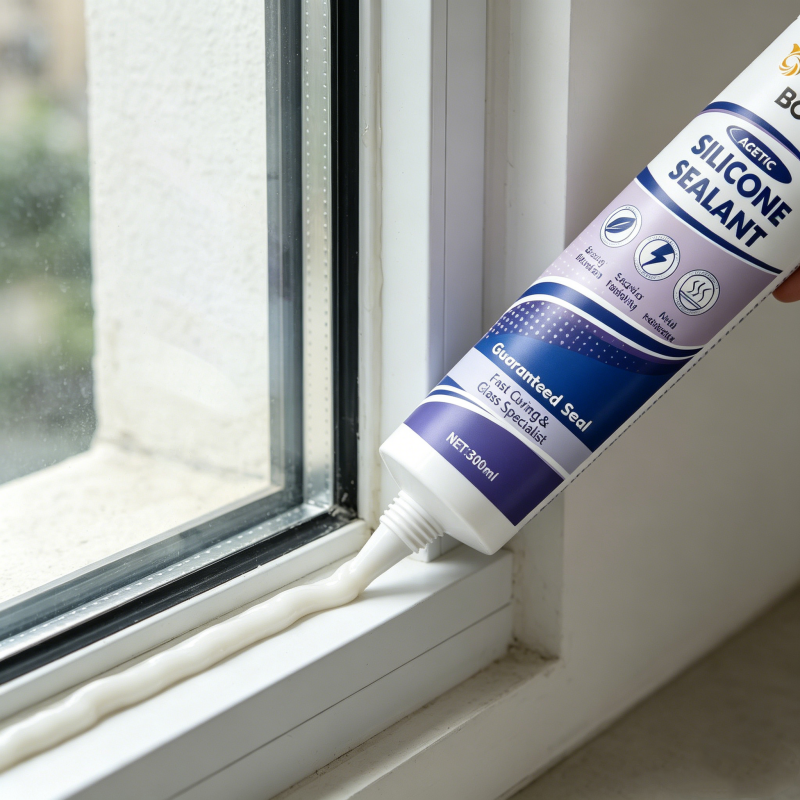
Acetic Silicone Sealant: Skin Formation, Full Cure and Return-to-Service Questions
A glass-sealing job can look finished before its sealant is ready for the next stage. For distributors answering customer questions, the important distinction is between an early surface change and the condition required for the intended service. These questions help organize an Acetic Silicone Sealant inquiry without promising one curing schedule for every product and joint.
1. Does a dry-looking surface mean the whole bead has cured?
No. In moisture-curing, one-component silicone systems, the reaction begins at the exposed surface and progresses into the material. Elkem’s explanation of RTV-1 technology describes this outside-to-inside process. A surface film is therefore not evidence that the interior has reached the required condition. Elkem: What is RTV-1 silicone?
Avoid using a finger-touch result as the sole release criterion. Record what was observed, but ask for the exact product’s guidance on through-cure and readiness for the planned application. Do not cut or damage an installed joint simply to perform an improvised check.
2. Why can similar-looking beads behave differently?
Moisture access, the section being cured and environmental conditions matter. WACKER’s processing guide explains how moisture diffusion affects RTV-1 curing and why enclosed configurations need particular consideration. This is a general mechanism, not a WITOP BOND cure-rate specification. WACKER: ELASTOSIL RTV silicone material and processing guide
Before asking for a waiting period, describe the bead dimensions, surrounding materials, installation date and known temperature and humidity. Sika’s GP-101 data sheet similarly links its acetoxy product’s cure to atmospheric moisture and provides product-specific application limits. Do not copy its numerical values to another brand or model. Sika: Sikasil GP-101 Product Data Sheet
3. When should tooling be finished?
Use the selected grade’s instructions for its working window. Once a skin has formed, treating the surface as though it were still freshly applied can undermine a consistent finishing process. Sika Canada’s GP guidance specifies tooling before skin formation and gives its own restrictions on tooling liquids. Sika Canada: Sikasil GP application FAQs
Prepare access, tools and masking arrangements before starting. Do not assume that soap, water or another finishing liquid is acceptable for every silicone. Confirm any proposed agent with the supplier and record it when evaluating a sample or investigating a complaint.
4. Can the joint be exposed to water once the surface feels firm?
Not on that observation alone. First distinguish installation conditions, permitted exposure after curing and the timing for putting the assembly into service. The description waterproof does not establish immediate water resistance, suitability for continuous immersion or compliance with a particular project requirement.
Ask the supplier for written instructions covering the exact grade and joint. Provide the intended exposure rather than requesting only a generic cure time. If those instructions are missing, keep the release decision open and seek technical review.
5. Can extra heat or added water solve slow curing?
Do not improvise an acceleration method. WACKER discusses controlled curing conditions for its materials and identifies potential problems associated with heat or water contact. Such guidance is formulation- and process-dependent; it is not permission to heat or wet a construction joint. WACKER: ELASTOSIL RTV silicone material and processing guide
Instead, compare the recorded conditions with the selected product’s instructions. Report the difference to the supplier and agree the next step. Do not add materials to the cartridge or treat an unverified workaround as an approved installation procedure.
6. Does complete curing make ordinary acetic silicone aquarium-safe?
No. Curing progress and application approval answer different questions. A general-purpose glass sealant is not automatically an aquarium construction product. For example, the Sikasil GP-101 sheet excludes aquarium and structural-glazing use, despite describing an acetoxy silicone technology. This example demonstrates a selection boundary, not a limitation copied into WITOP BOND specifications. Sika: Sikasil GP-101 Product Data Sheet
An aquarium needs an expressly suitable grade, an appropriate design and the manufacturer’s preparation, curing and testing requirements. Vinegar cure, clear appearance and a reduced smell cannot establish that approval. Follow the actual SDS for handling and ventilation; do not use an odor check as a safety test.
7. What information makes a technical inquiry useful?
Send a short record containing the product name and grade, batch reference, storage history if known, substrate details, bead dimensions, application time, conditions and the planned next operation. Add clear photographs and distinguish direct observations from estimates.
For a trial, agree the sample arrangement and assessment method with the supplier before starting. Retain the record for repeat orders, and review it whenever the product, joint configuration or exposure changes.
WITOP BOND manufactures and supplies adhesives and sealants with global shipping. For an Acetic Silicone Sealant inquiry, share the intended use, destination and estimated quantity, and request model-specific TDS/SDS and application guidance. Confirm sample and delivery arrangements for the actual order.
Technical note: No WITOP BOND curing time, aquarium approval or performance certification is asserted here. External technical sources explain general mechanisms or their own products; they do not replace documentation for the selected WITOP BOND grade.
View our Acetic Silicone Sealant product information and use the inquiry form below to discuss your requirements.