NEWS
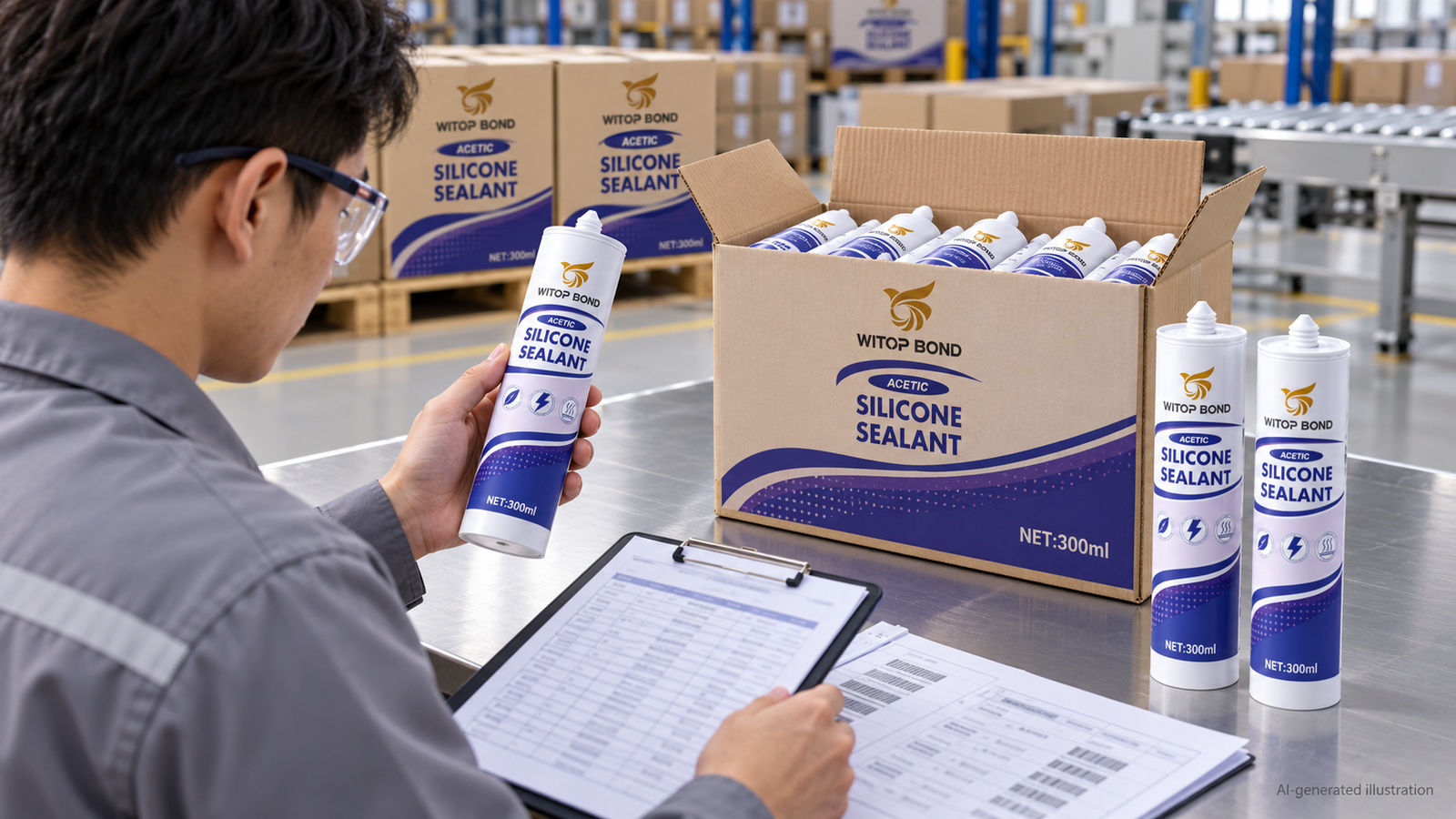
Acetic Silicone Batch Traceability: A Distributor's Label-to-Order Checklist
When a customer reports a problem with a glass sealant, the first useful question is often: which product and delivery are involved? A clear record can narrow the inquiry before anyone debates installation conditions or product performance. This guide proposes a practical traceability workflow for Acetic Silicone Sealant distributors, not a claim about an existing WITOP BOND inspection system.
What should match before an order is accepted?
Agree the product identity in writing: manufacturer, exact grade or code, curing description, color and packaging format. Connect that specification to the quotation and purchase order. Avoid an order line that says only clear silicone, because a short description can conceal different intended applications.
Ask which identification marks will appear on the cartridge and carton and how the supplier explains them. Request an example or written description before dispatch if the coding is unfamiliar. Do not invent a production date from an unexplained string of letters or assume that every number printed on a box is a batch number.
Why does the document-to-product match matter?
A technical sheet belongs to a defined product, not an entire packaging color or cure category. Sika’s GP-101 page, for example, identifies a particular acetoxy formulation, its storage-dependent shelf life and specific application limits. That demonstrates why documents must match the actual grade; its numerical data and approvals do not apply to WITOP BOND. Sika: Sikasil GP-101 product information.
Record the title, revision and source of the TDS and SDS supplied with the inquiry. If the product name, chemistry or code conflicts between documents and the order, raise a written question before release. Keep the answer with the order rather than silently correcting a label in your own records.
What evidence should the receiving team retain?
Use a consistent receiving record that links the shipment to the purchase order and supplier documents. Photograph identification markings clearly enough to read them later, including the relationship between the outer carton and its contents. Follow an agreed sampling plan; checking one convenient carton does not establish that an entire delivery is uniform.
- Purchase order and delivery references.
- Product code, color and packaging received.
- Batch or lot references exactly as printed.
- Declared date information and the supplier’s explanation.
- Quantities associated with each recorded lot.
- Observed discrepancies, photographs and the person reviewing them.
Distinguish verified information from missing information. A blank field marked awaiting supplier clarification is more useful than a guessed date. Keep original photographs alongside the typed record so transcription mistakes can be checked.
What happens when cartons are split for smaller orders?
Preserve the connection when warehouse staff break down a shipment. Associate the outgoing quantity with its recorded lot and customer order in your internal system. If an order contains more than one lot, record each rather than replacing them with a single convenient reference.
Keep this process proportionate and protect customer information. Technical inquiries generally need the relevant product and delivery evidence, not an unrestricted copy of the customer database. For internal exercises, use a fictitious order reference instead of publishing real shipping details in marketing material.
How should a mismatch be handled?
Identify and separate the affected stock in the normal warehouse process, record the reason for the hold, and ask the supplier for clarification. Do not remove original markings, relabel an uncertain date, or mix disputed stock into a new order to make the discrepancy disappear.
The review should state what was checked, the supplier’s response and who authorized the next step. A matching label does not prove that storage conditions were acceptable or that the sealant suits a customer’s joint. Likewise, a paperwork discrepancy does not by itself prove defective chemistry. Keep the investigation factual.
Does traceability establish aquarium or structural suitability?
No. Traceability identifies the material and its distribution record; application approval answers a different question. Ordinary glass-sealing descriptions, vinegar cure and waterproof wording do not establish aquarium or structural-glazing suitability. Request explicit evidence for special uses and follow the selected grade’s instructions.
For repeat orders, review changes in product identity or intended application instead of automatically carrying an old approval forward. Agree how revised documents and substitutions will be communicated before they become a receiving problem.
Send a clearer procurement inquiry
WITOP BOND is an adhesive and sealant manufacturer and supplier offering global shipping. For an Acetic Silicone Sealant order inquiry, share the intended use, requested color and packaging, estimated quantity, destination and identification requirements. Ask us to confirm the exact grade, available documents and order-specific arrangements.
Technical note: This is a proposed distributor workflow, not evidence of WITOP BOND certification, batch-test results or a guaranteed traceability service. Confirm the actual documentation and supply arrangements for your order.