NEWS
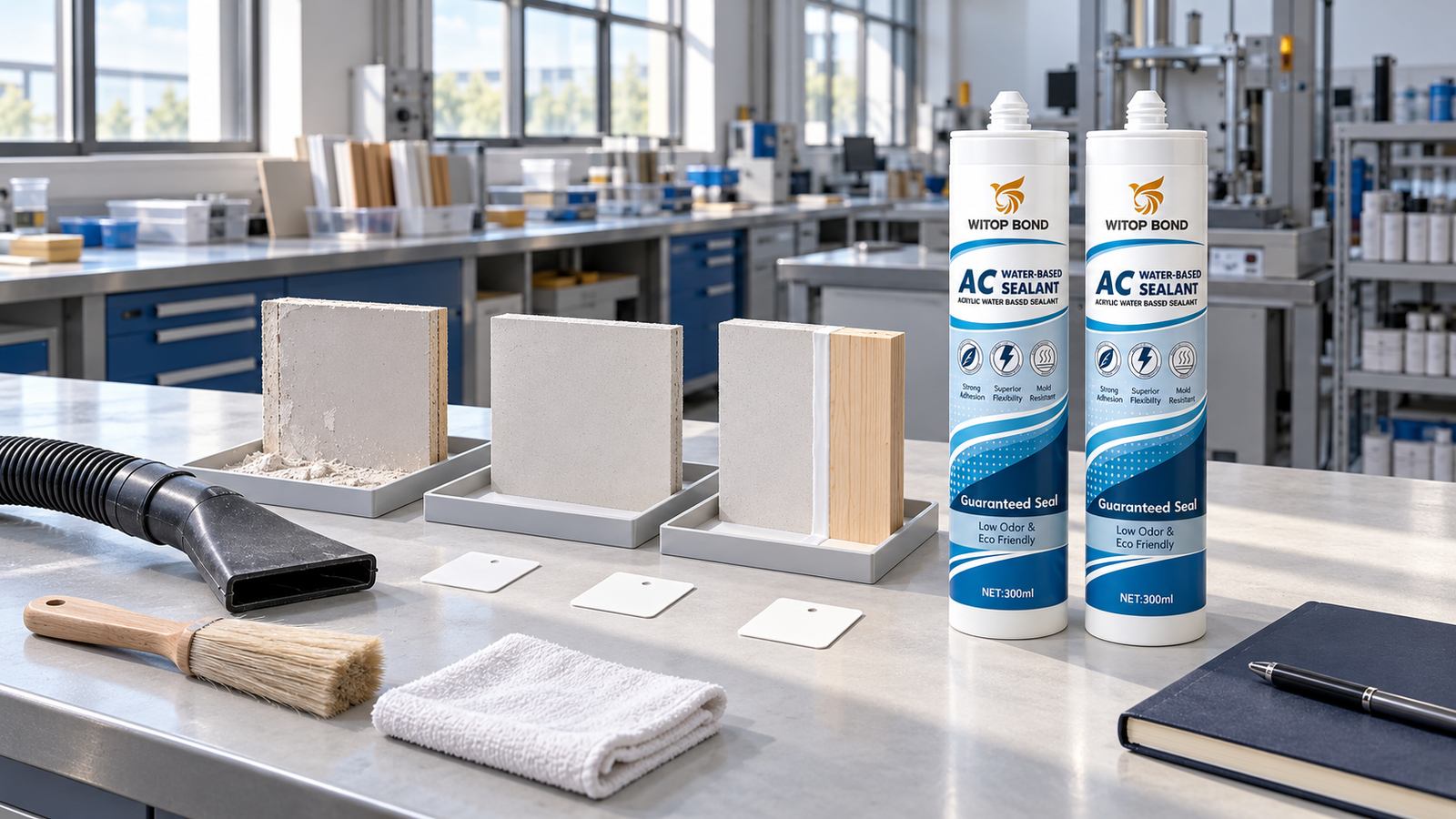
Acrylic Sealant on Dusty Plaster: Surface Preparation Questions Before Filling
Freshly cut board edges and renovated plaster can look ready for decoration while still carrying loose material. Before filling an interior trim joint with Acrylic Sealant, establish what the sealant will actually touch. This guide focuses on preparation and sample records, rather than paint selection or the quantity of cartridges to order.
Is the problem surface dust or a weak edge?
Record the location and material on both sides of the joint. Distinguish a paper-faced board edge, plaster skim, exposed gypsum, timber trim and an existing coating. Photograph the edge before cleaning so the initial condition is not lost. Ask the installer to identify visible powder, crumbling material, loose paint or a previous repair layer separately.
Do not assume every dusty-looking surface has the same cause. If the edge continues to break away, stop treating the issue as a simple cleaning task and have the substrate assessed. Covering an unstable layer does not establish that the underlying joint is suitable for filling.
What should the preparation instructions specify?
Obtain the current TDS/SDS for the exact acrylic grade and the relevant substrate instructions. Sika’s Sikacryl S guidance, for example, requires a sound surface without dust or loose particles and gives its own product-specific preparation provisions. This supports checking the substrate condition, not copying Sika’s primer recipe into another product system. Sika: Sikacryl S substrate preparation.
Have the supplier or responsible installer confirm the permitted removal method, any cleaning step, the required surface condition and whether a primer is needed. Do not improvise a dilution, solvent or consolidating treatment based on a different manufacturer’s instructions. Any proposed treatment becomes another material that must be identified and reviewed.
Can the preparation be checked without damaging the surface?
Agree a small trial area or representative offcut before treating the full job. Record the method and tools used, then inspect whether loose material remains and whether the process has damaged the board facing or adjoining finish. Visual cleanliness is a useful observation, but it is not a certified adhesion result.
Use the site’s dust-control and protective-equipment requirements for the materials involved. Avoid creating an airborne dust cloud merely to demonstrate cleaning. If the surface requires extensive repair, return the detail to the responsible trade rather than increasing the amount of sealant.
Does clean-looking also mean ready to fill?
Not necessarily. Record unresolved dampness, recent repairs and cleaning residues for review. Follow the selected grade’s requirements for the substrate and application conditions; do not invent a universal waiting period after plastering or washing. The sequence should also prevent later cutting or sanding from contaminating an already prepared joint.
Check that the joint remains within the approved acrylic application. Low-movement decorative filling is different from permanent waterproofing or structural bonding. A preparation trial cannot correct an unsuitable joint function, an active leak or unexplained recurring movement.
How should a representative trial be recorded?
Use the actual joint-edge materials and agreed preparation. Keep the geometry and application method within the selected product’s instructions. Give the sample an identifier and record the product batch, substrate description, preparation steps, environmental observations and application date.
Agree the assessment stage and method with the technical reviewer. If a sample separates, photograph both faces and record what is visible: sealant lifting away, material remaining on the sealant, or a damaged substrate edge. Treat those as observations for review, not as an automatic diagnosis or strength classification. Do not perform destructive checks on finished work without authorization.
What should accompany the purchase inquiry?
Send the supplier a concise preparation record, not just a request for strong adhesion. Include photographs, substrate and finish names, joint location, planned exposure, any proposed primer and the finishing sequence. Keep the accepted method with the installation instructions and revisit it when a substrate or coating changes.
WITOP BOND manufactures and supplies adhesives and sealants with global shipping. Visit our Acrylic Sealant product page and use the inquiry form below to share your materials, destination and estimated quantity. Request the exact grade’s technical and safety documents and discuss sample evaluation before a bulk order.
This is a practical preparation-review guide, not a standardized test or a statement of WITOP BOND approvals. External technical guidance remains specific to the manufacturer’s own formulation.