NEWS
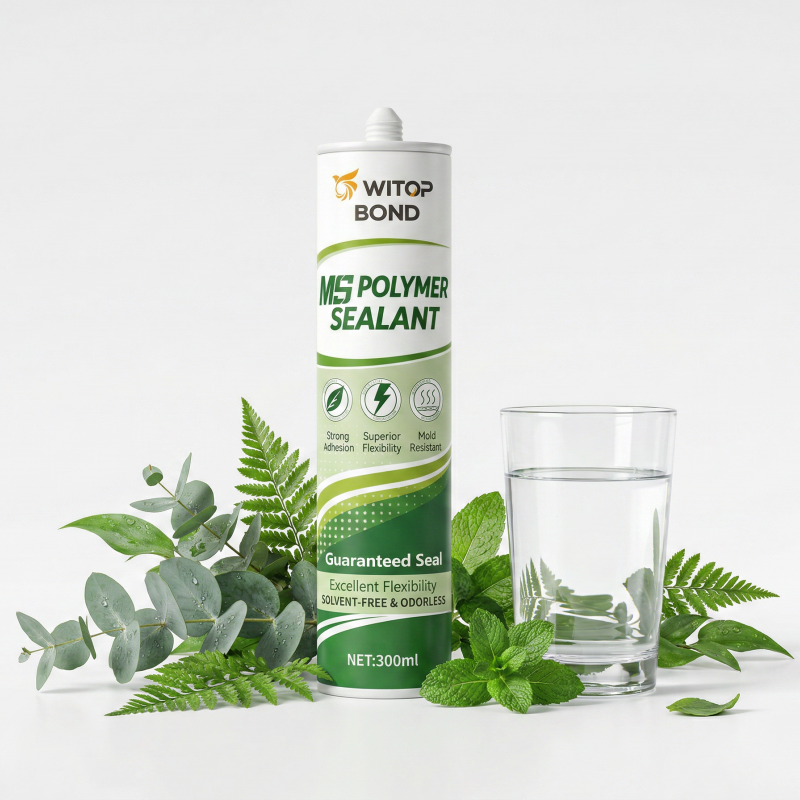
MS Silicone Sealant for Paintable Sealing and High Strength Bonding
MS Silicone Sealant is a product name used in the WITOP BOND range. When comparing products, buyers should also check the chemistry: an MS polymer sealant belongs to the hybrid polymer category and should not be assumed to have the same properties as conventional silicone. Product selection begins with the exact Technical Data Sheet, not the marketing name alone.
For projects involving painted finishes and multiple building materials, MS polymer products can be worth evaluating. The relevant questions are whether the selected grade supports the required bond, accepts the intended coating and remains suitable under the actual service conditions.
Paintable Joints for Finished Surfaces
Paintability can be useful where a joint needs to blend into surrounding walls, trim or panels. However, paintable does not mean compatible with every paint. Drying time, coating chemistry and joint movement can affect the final finish.
Bostik’s PRO-MS 50 technical guidance calls for coating compatibility checks and identifies limitations for particular paint systems [1]. For your project, test the actual coating on the selected WITOP BOND grade and follow its instructions. A flexible joint may move more than its paint film, so an intact sealant does not necessarily prevent the coating from cracking.
What High Strength Should Mean in Practice
High strength is useful only when the test and application are defined. Ask which materials were bonded, how the surfaces were prepared, how long the sample cured and how the result was measured. Initial holding power and final cured strength answer different questions.
For bonding work, provide the component weight, bond area and expected load direction. For sealing work, focus on joint movement, adhesion and exposure as well as strength. Do not assume that a general-purpose product can replace structural fixings or support heavy overhead components without an approved system and technical review.
Universal Adhesion Still Requires Testing
Universal adhesion is best treated as a description of broad intended use, not a promise to bond every material. A coating, plastic surface, release agent or old sealant can change the result even when the underlying building material appears familiar.
Use actual production samples for the adhesion trial. Identify whether primer is required, and check for staining or other compatibility issues where appearance matters. Restrictions on glazing, immersion and particular substrates differ between grades. The MS Safe Seal technical sheet provides one manufacturer-specific example of these limitations [2]; its approvals and performance figures do not transfer to another product.
Low Odor and Indoor Applications
Some MS polymer formulations are described as low odor. That is not the same as an independently verified odorless or zero-emission claim. Low odor also does not remove the need to follow the Safety Data Sheet and workplace ventilation requirements.
For an indoor specification, request the relevant emissions documentation for the exact formulation. Avoid selecting solely by how the uncured material smells.
Supply for International Buyers
WITOP BOND manufactures and supplies adhesives and sealants for international buyers and arranges global shipping. Share the substrates, bonding or sealing task, paint system, service conditions, packaging needs, quantity and destination so we can discuss a suitable grade.
Confirm samples and supporting technical information before a bulk order. Product suitability, available performance evidence and shipment arrangements should all be agreed for the selected formulation.
Technical References
These references explain product-selection considerations. They are not certifications or evidence that WITOP BOND formulations match the cited products.