NEWS
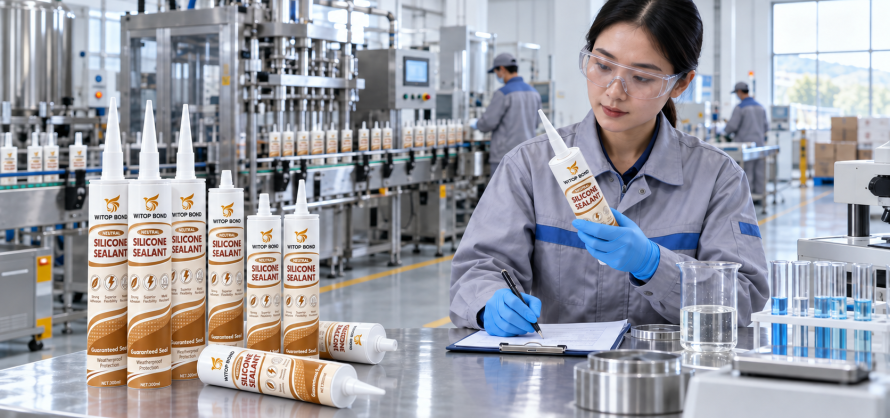
Neutral Silicone Sealant: Non-Corrosive Weather Protection for Curtain Walls and Stone
Neutral silicone sealant is widely used in modern construction because it combines flexible sealing with excellent resistance to weathering. Unlike acetic silicone, it cures without releasing a strong vinegar odor and is generally more compatible with metals, coated surfaces, concrete and other sensitive building materials.
Why Choose a Non-Corrosive Sealant?
During curing, acetic silicone releases acidic by-products that may affect certain metals and cement-based materials. Neutral silicone uses a non-acidic curing system, making it a more suitable choice for aluminum frames, coated steel, galvanized components and many facade materials.
However, “non-corrosive” does not mean that compatibility testing can be skipped. Surface coatings, primers and cleaning chemicals may still influence adhesion. A sample test is recommended before large-scale installation.
Weather-Resistant Performance
Exterior joints are exposed to sunlight, rain, temperature changes and building movement. A properly selected neutral silicone sealant remains elastic and helps prevent water and air from entering the joint.
Common applications include:
Window and door perimeter sealing
Exterior facade joints
Aluminum panel connections
Roofing and flashing details
Curtain-wall weather seals
Joints between different construction materials
Sealant performance also depends on joint design, surface preparation and application quality. The joint must have sufficient width and depth to accommodate movement without tearing or losing adhesion.
Neutral Silicone for Curtain Walls
Neutral silicone is commonly used to weather-seal joints around curtain-wall panels, mullions, transoms and perimeter connections. Its UV resistance and flexibility make it suitable for exterior facade environments.
Curtain-wall weather sealing must not be confused with structural glazing. If the sealant is required to retain glass or transfer structural loads, a specifically approved structural silicone system must be used. Structural applications require engineering calculations, adhesion testing and written technical procedures.
Is Neutral Silicone Stone Safe?
Natural stone such as marble, granite and limestone can absorb components from unsuitable sealants, leaving dark edges or permanent stains. For stone applications, select a neutral silicone specifically identified as non-staining and stone compatible.
Neutral curing alone does not guarantee stone safety. Always conduct a staining and adhesion test using the actual stone before beginning the project.
Application Recommendations
The joint should be clean, dry and free from dust, oil, old sealant and loose material. Install a compatible backer rod when required, apply primer if recommended, and tool the sealant before a surface skin forms.
Protect the joint from water, contamination and excessive movement while curing. Always follow the technical data sheet for application temperature, curing time and service limitations.
Frequently Asked Questions
Can neutral silicone be used on metal?
It is generally more suitable for metal than acetic silicone, but compatibility with the exact metal coating should still be tested.
Can it be used on every curtain wall?
No. The selected product must meet the facade specification and required movement rating. Structural glazing requires an approved structural silicone.
Is every neutral silicone safe for marble?
No. Use a tested non-staining stone-grade formulation.
Can neutral silicone be painted?
Most conventional silicone sealants are not reliably paintable. When painting is required, a compatible MS polymer sealant may be more suitable.
WITOP BOND manufactures neutral silicone sealants for construction, facade and global distribution applications. OEM branding, packaging and product specifications can be discussed according to the customer’s market and project requirements, with international shipping available.