NEWS
Why Window Sealant Peels Away: A Neutral Silicone Resealing Checklist
A bead pulling away from a window frame does not, by itself, identify the cause. Replacing it without investigating can leave the same problem in place. This question-and-answer checklist is intended for non-structural window perimeter weatherseals and the procurement decisions behind a repair.
What should be recorded before removing the old sealant?
Create a short fault report before disturbing the evidence. Note which opening is affected, where the gap appears, whether leakage occurs during particular weather, and when the original installation was completed. Include an overall photograph and closer views of both joint edges. Ask for the original sealant name and installation records if available.
Describe the separation accurately: release at the sealant-to-surface interface is different from tearing within the sealant. If paint or another surface layer comes away with the bead, include that observation too. These are clues for investigation, not a diagnosis from a photograph. Dow discusses adhesion, internal tearing and repair assessment in its construction sealants technical manual.
Will a different cartridge solve the leak?
Do not assume it will. Have the responsible installer check the window assembly and intended drainage path, not only the visible bead. Surface contamination and trapped moisture are among the issues addressed in Henkel’s sealant best-practice guidance. Avoid covering drainage openings while trying to seal a visible gap.
Separate the purchasing question from the investigation: first identify what must be repaired, then request an appropriate product. This prevents a distributor from promising that a change of sealant alone will resolve a problem that has not been assessed.
Does “neutral” guarantee compatibility?
No. Neutral cure is not blanket approval for every coating, plastic, stone or adjoining glazing component. Confirm the precise substrate and intended joint against the proposed model’s current TDS. Stone-safe suitability requires appropriate non-staining evidence; it should not be inferred from neutral cure alone. Bostik’s technical FAQ explains the staining risk of unsuitable sealants on natural stone.
Likewise, weather-resistant or non-corrosive wording does not establish structural glazing approval. Refer glass-supporting joints, curtain wall structural bonding and high-rise access work to qualified specialists. This checklist does not provide a repair method for those applications.
Can fresh silicone be applied over the existing bead?
Do not specify a generic overlay. The old material, its remaining adhesion and the proposed repair system must be assessed. Dow distinguishes failed organic sealants from certain repairable silicone joints and recommends a representative removal-and-cleaning mock-up. Where hazardous substances may be present in older joints, obtain specialist handling advice before disturbing them. The Dow repair guidance is system-specific, not automatic approval for another brand.
For procurement, request a written preparation method and identify who approves it. Record any cleaner, primer and backing material as part of that method. Do not allow an undocumented substitution simply because a product is available locally.
How should the repair trial be organized?
Agree on a representative location with the project team. Record the replacement model and batch, substrate finish, preparation sequence and inspection plan. Take before-and-after photographs from the same position. Assign responsibility for checking application against the approved instructions and for deciding whether the trial can proceed to wider repair.
Keep each decision distinct: material selection, preparation approval, installation acceptance and any required performance testing. If a step fails, document the change and repeat the relevant assessment. A tidy-looking bead should not be the only acceptance criterion, and a trial should not be described as certification.
When can the repaired joint be tested?
Use the selected model’s instructions and an agreed test method. Cure development and testing readiness depend on conditions and joint geometry; different tests can require different waiting periods. Dow explains these distinctions in its performance-testing FAQ. Its published times apply to its products and must not be copied into a WITOP BOND specification.
Schedule the inspection before arranging handover, and record the actual conditions. Ask the technical reviewer to confirm the result and any remaining limitations. Keep the report available for future maintenance rather than relying on the installer’s memory.
What information helps a supplier recommend the next step?
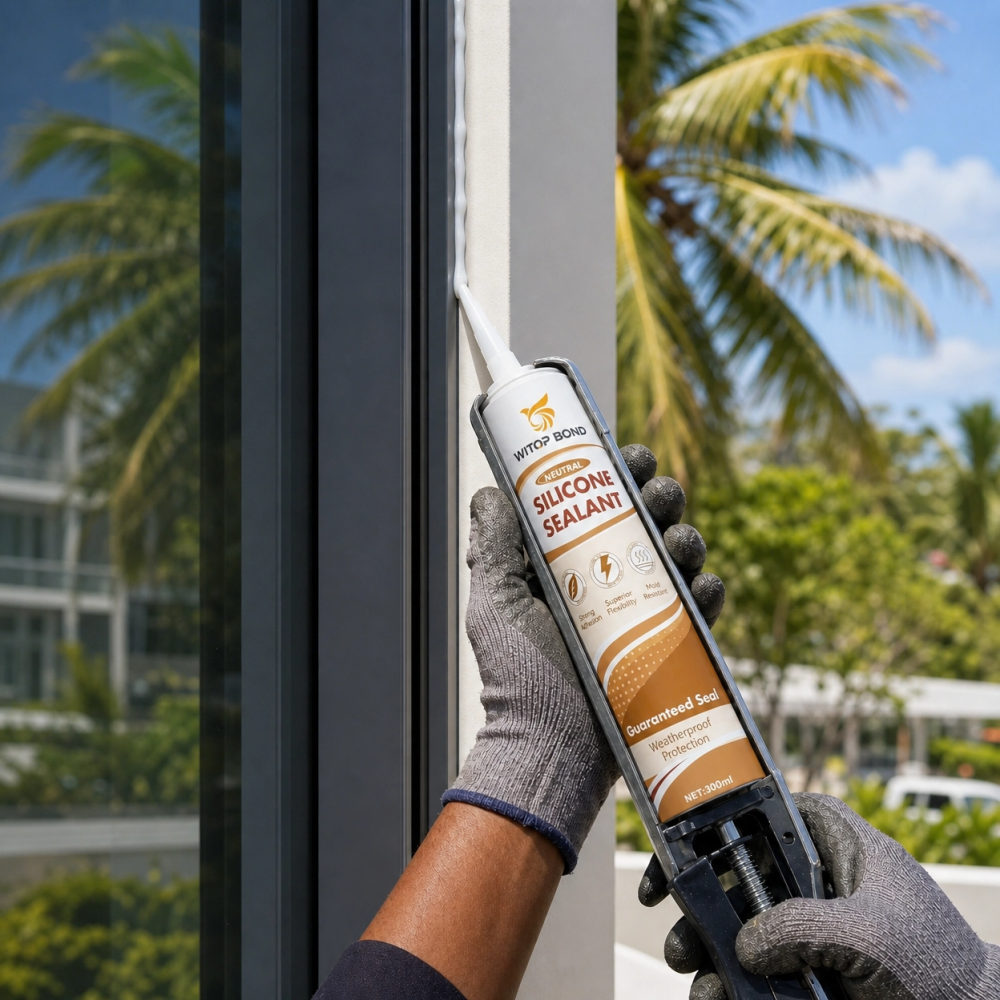
Send the fault report, frame and wall materials, existing sealant identity if known, joint details, project location and estimated quantity. WITOP BOND manufactures and supplies adhesives and sealants with global shipping. View our Neutral Silicone Sealant product page and use the inquiry form below to request relevant TDS/SDS information and discuss sample evaluation.
Technical note: This is general troubleshooting guidance. Product suitability and repair design require project-specific confirmation. External references are not evidence of WITOP BOND certification or tested performance.